A Continuum of Radical Invention Shannen SP
Shannen SP
Photography
Delusional Film
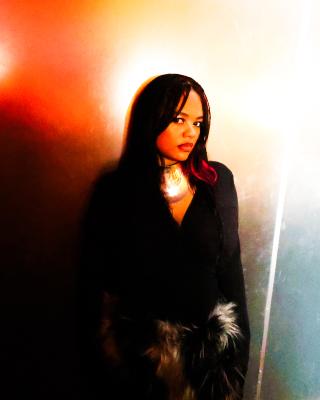
Shannen SP approaches her work as a curator with attentive eyes and ears, careful about cultural contexts and what needs to be considered when sound moves. Ahead of the release of Mzansi Bass on Colombian label TraTraTrax, she sat down in London in early spring to talk about the feeling of responsibility in her curatorial work, the genesis of the compilation, and the continuum of South African electronic music—from bubblegum and kwaito to gqom and amapiano—as a history of radical invention.
The eight-track compilation spotlights the spaces between South African electronic music genres deeply rooted in Black African rave scenes from Durban, Johannesburg, Cape Town, the Eastern Cape, and Pretoria, bringing these genres into proximity with their global mutations in Brazil and the Netherlands. The result is a release that works as both a celebration and a continuation of genres and artists that move beyond categorisation.
Mathis Neuhaus
How did this compilation come about?
Shannen SP
I worked with a lot of the artists on the compilation on a number of different projects before this, so this has been a while in the making. I’ve always been drawn to creative collaboration, and compilation formats really embody that for me. The process for this was quite different to compilations I’ve worked on before—I spent a lot of time between South Africa and London, I would go visit family but also held studio sessions with some of the producers to draw out these hybrid sounds that move beyond categorisation. That compilation has been built across a two-and-a-half-year period of trips back and forth, studio sessions—really building relationships and getting to understand each other’s creative practice. Some of these artists are so unbelievably talented and for me it can feel really frustrating seeing how limiting the electronic music industry can be: with amapiano, there’s only a small number that really broke through and were regularly coming to Europe. That never should have happened like that. I really don’t subscribe to this thing of having a limited number of South African representatives for a whole genre.
Mathis Neuhaus
The music scene is very trend-driven. There’s always the next new thing to discover. Which might be nice as a consumer. But it’s important to consider what this means for the artists. How to build a sustained career rather than become a one-hit-wonder situation.
Shannen SP
This is what I am hinting at with having only one or selected representatives. That kind of trend-driven relationship often only allows for one. It’s not an investment in the genre, allowing it to grow and develop. Amapiano was quite a revolutionary moment. Within black electronic music circles, we were all scratching our heads—make the club Black again, make dance music Black again. And this genre just happened and did it. There was no need to over-theorise anything. It just happened. We’re having this conversation during one of the most precarious times in recent history. International power dynamics are shifting and the West may be decentralised. My compilation with TraTraTrax really reflects that for me, it opens up the floor musically as well. Dance music has been super hegemonic for so long. There are outliers pushing the culture forward, but it can be frustrating when certain artists or genres or even BPMs are sidelined. Dance music doesn’t have to be tear-out to be euphoric. I think as Black artists we should be supporting African electronic music genres more. It’s something I care about very deeply. I played amapiano in Berghain at one point, really bass-centric stuff, rattling log drum piano. Kode9 always said to me, “Don’t ever compromise. Everywhere you show up, play exactly what you have in mind. That’s how people understand your sound.” And I remember someone saying to me afterwards, “I can’t believe you did that.” I didn’t even know that people would see that as a thing. That’s the problem for me. I wish this music would be received in the same way we receive other kinds of electronic music.
Mathis Neuhaus
Not othering it.
Shannen SP
People get completely entranced by it. In the same way that you would with techno. Some people consider amapiano too slow, too formulaic. But that’s missing the point. The loops are there on purpose. It’s entrancing. In the same way that psytrance is a functional music, amapiano’s and gqom’s functionality is dancing. Pure, 100% unadulterated embodiment. There’s a physicality to it. That’s why the loops are there. It’s raw, minimalist, hypnotic, intensely reflective of inner-city life but also transcendent. The rhythms feel almost like rupture with the disembodied bass. It’s the use of space: the relentless basslines, looping progressions. If you’ve ever seen DJ Lag perform, you’ve seen people transported.
Mathis Neuhaus
There lies an interesting contrast at least—between the musical expression and how it’s coming to life, and then the reception that can tend to be like: this is important because A, B, C.
Shannen SP
It’s hard in the context of somewhere like South Africa, where the music has been such an integral part of resistance and rebuilding identity post-apartheid. Artists like Brenda Fassie , her music was a vehicle for resistance in a really important way. And it’s almost like…picking a piece of it up and putting it back together, you get something new out of it. A hybridity, something new is formed. I was thinking on my way here, “I don’t want to have a really intellectual conversation about this music at all.” But then I have to be honest with myself about why I feel so passionately about Black electronic music. To the point where I’m low-key dedicating my life to this shit. It’s quite hard to just say: whatever.
Mathis Neuhaus
Let’s talk about the upcoming compilation some more: the artwork looks pretty amazing.
Shannen SP
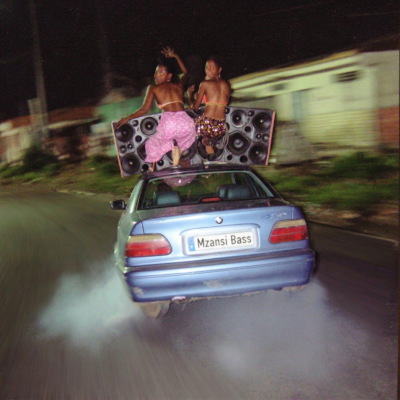
It’s done by artist Unkle Luc. Music feels intrinsically related to traveling in a car in Johannesburg. Because of the apartheid architecture of the city, there are long distances between different areas. You might have to drive for a really long time to go to a party. It was easier to keep people segregated like that. The cover reminds me of driving to Soweto to go to a party. The kind of excitement, the energy. I really wanted to find a hyperreal aesthetic that visually resonated with the music’s energy. There’s something unnerving, atemporal, and immersive about it. It holds that same kind of third space the music does—a zone where the real and the surreal coexist. Reality and euphoria collide.
Mathis Neuhaus
Embodiment is kind of the key term here as well. This really shows the physical manifestation of music in this context—the way you just described it with taxi culture.
Shannen SP
There is a refusal of nostalgia in the rate of evolution of South African electronic music genres. That’s not to say that classics aren’t being sampled or that there isn’t an acknowledgement of what came before, but producers are always pushing things forward, and the taxi culture of handing out unreleased music as a form of distribution across the cities helps to accelerate that. From bacardi house to afro-house to gqom to amapiano and whatever comes next—it’s a continuum of radical invention.
Mathis Neuhaus
You said you are at a point of starting to make sense of your own career—where does this compilation sit in that?
Shannen SP
I meant that in the sense of this collaborative process—using my own practice to amplify artists and music from the global South, specifically African electronic music. And that’s also extended into my art practice. I have a digital arts and music platform called CEL Studio. The work we’ve been doing there is very much centered around world-building and collaboration with international Black artists and culture makers—Black artists in Liverpool, in Canada, in South Africa, in Paris. It’s ecosystem building. And with the way the world’s changing, that’s the reason why I still find purpose in what I’m doing.
Mathis Neuhaus
I think there’s very little of this kind of purpose-searching going on in DJ culture. It drives me crazy reading the classic cliché of “keep politics off the dance floor.”
Shannen SP
There’s a quote I came across, from an article where South African DJ Clive Bean talks about how in the 1980s and 90s, a lot of the DJs and producers he spoke to in South Africa were really into US house music, mentioning Frankie Knuckles as an influence. It almost became a political force under the apartheid regime for Black South Africans. Chicago house then fed into sounds like Kwaito and Bubblegum , early post-apartheid South African genres. There’s this interconnectivity, these tools have been used to empower people and resist. So then to have people say keep the politics out of dance music, when a lot of these genres that started out this way have been completely whitewashed and co-opted. It’s almost offensive. Especially with the amapiano boom, it was Black artists with Black managers starting up Black labels and collaborating with other Black artists. South Africa is still very racially segregated. They call it the rainbow nation. And amapiano was something that was very empowering for Black artists. That’s why it was so exciting. And that’s why I feel kind of protective over it. I am obsessed with what they’ve managed to achieve, making it one of their biggest cultural exports. Until it came to Europe, it was very much just run by Black South Africans. Big agencies and labels have gotten involved, which I think has been a little bit to the detriment of the genre, but beneficial for the individual artist.
Mathis Neuhaus
Can you tell me a little more about how you actually met the artists?
Shannen SP
Gosh, that is a long story. It started with the compilation Amapiano Now , where I started actually connecting with a lot of people. And then when I would go to Johannesburg, we would meet up. That was 2021. I started building a community there, hopping from one studio session to the next. Then I started working on this project, but I didn’t know what it would be. I originally had a label distribution deal, but that went under. So, I had all of this music. I still have so much more than what’s on this compilation. Then I went back to Johannesburg and did a project with Spitfire Audio, a sample pack of different South African sounds. Some of the artists I worked with there are also on the compilation: Jay Music , who did “Midnight Session”. Then me and Jay did a Boiler Room together. Jay came to London and we did studio sessions here with UK artists. It’s been an ongoing conversation. In my mind it’s like the structure of a label, but without the infrastructure. We wanted to encourage cross-cultural collaboration and experimentation. Which is how we got the Lyzza and Boniface collab, or mine and Hennybelit’s track where we tried to combine UK bass sounds with South African influences.
Mathis Neuhaus
And the music itself, where does it sit?
Shannen SP
There is such a thing as mainstream amapiano. But the underground is very much alive, especially in gqom. The essence of gqom is underground. When I was in Cape Town, I asked someone at a jazz bar where I could go and listen to really good amapiano and gqom. This was a couple of years ago and they were like, “You have to go to the hood for that.” You have mainstream and underground versions of everything. This compilation is very much celebrating and honouring the underground. And it’s called Mzansi Bass for a reason. It’s made up of hybrid sounds that include gqom, 3-step, bacardi, amapiano and pretori rap, but not many of the songs can actually fall into one category. It’s meant to sit somewhere in between. I want it to just be received as club sounds.
Mathis Neuhaus
And bring it to the right places?
Shannen SP
It feels like you do have to be quite calculated in where you present the music, what kind of audiences, which clubs. It’s almost a formula I’ve been trying to work out for a while. It’s really important to me that the music is received not only in the diaspora scene, but also on a more universal platform. I don’t see any reason why it shouldn’t exist in the same circles as other underground dance music or even mainstream dance music. This is why establishing a tour circuit for high to mid to new artists has always felt really important.