Not Playing by the Rules: LUFF 2025
Not Playing by the Rules: LUFF 2025
Photography
Malik Beytrison
Al Gutierrez
Nicolas Hueber
Abstracted bodies in frantic motion. Fleeing, rioting, dancing? The ambiguity of LUFF 2025’s key visuals sets the tone for this year’s festival edition.
On its website, the organizers double down with an editorial that opens with a striking declaration: “Today, we don’t play anymore.” In a world, fractured by injustice and complicity, LUFF expresses “an urgent need to act, to fight so as not to give in to despair.” The festival, which has highlighted emerging and overlooked artists in film and music from across the globe since its early days, refuses to stay passive in the face of a political climate that’s turning more oppressive day by day.
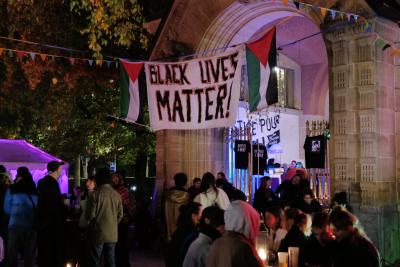
And so, LUFF’s political stance extended beyond the stage and screen where uncompromising (artistic) statements have always been in the spotlight. This year’s edition embedded activism into its operations and invited anti-racist collectives to occupy its spaces. Most prominently, LUFF opened not with a screening or concert, but with a conference titled “Racism, Anti-Black Racism and Police Violence.” The message: LUFF doesn’t just depict resistance—it enacts it. According to the festival’s website, LUFF also joined the Boycott, Divestment, and Sanctions (BDS) movement, boycotting companies complicit in the genocide happening in Gaza and declaring itself an Apartheid Free Zone (AFZ).
This decision provoked strong reactions. One organization, for example, addressed all sponsors and partners (including zweikommasieben, a media partner of the festival) in an open letter after the event, criticizing the festival’s actions and suggesting that support for LUFF be halted. In a post-festival statement, the organizers maintained that reactions like that only confirm the need for stronger, non-violent antifascist engagement—maintaining LUFF as a vital space where art and activism meet constructively.
The festival’s core offerings weren’t all that different from the past: the film programme burned with urgency—for example, the retrospective of Japanese documentary director Kazuo Hara, celebrated for his documentaires sans concession. Hara’s oeuvre cuts through complacency with raw, confrontational energy, and in giving him a platform LUFF did what it does best: introducing overlooked artists who deserve more visibility.
If you have attended LUFF in the past, you know the programmers also know how to lighten the mood. For instance, as the opening film, the festival presented Canadian director Kaye Adelaide’s tongue-in-cheek mockumentary The Rebrand, which mixes satire and horror, following a filmmaker hired by a recently canceled influencer couple desperate to polish their public image. Some of the music biopics also leaned toward the lighter side: Butthole Surfers: The Hole Truth and Nothing Butt was a delirious trip through the Texan punk band’s insane history, chronicling their mid-1980s rise through the underground scene—fueled by beer, LSD, and total disregard for decorum.
Next to that, the music programme was, as always, bold, unexpected, and exhilarating, amplified by a PA system that dazzles anew each year. Highlights included:
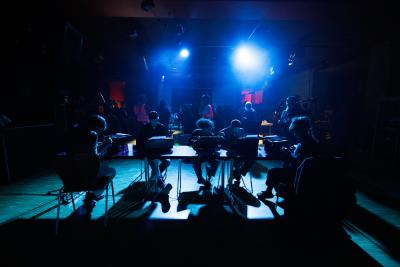
Poulomi Desai, a seasoned outsider artist, performer, community worker, and activist of South Asian descent, based in London, opening the Salle des Fêtes. Her participatory set featured a prepared sitar, toys, an armada of microphoned typewriters (to record dreams and nightmares), and a range of sonic effects—all open to the audience to play with, helping to create an oneiric cacophony (or perhaps a symphony?). It was a clever move to kick off the festival with Desai’s set: a concert that was as interesting conceptually as it was aesthetically, and an initial moment that created a strong sense of community.
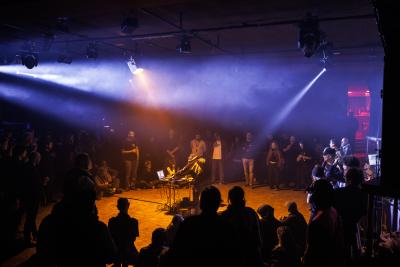
Kwami Winfield, from New York, alternating between sonic aggression and warm, enveloping tones reminiscent of early Yves Tumor, culminating in a microphone tossed across the floor, where Winfield performed surrounded by the spectators, to create piercing feedback at incredible volumes. Winfield, who sometimes joins the decolonial doom band Divide and Dissolve [see zweikommasieben #27] on stage, delivered a set not short on intensity.
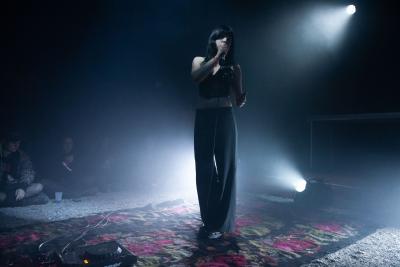
Ugnė Uma, a Lithuanian artist, turning the circus tent on the Esplanade into an off-kilter piano bar on the second day. Crooning over a predominantly piano backtrack for 40 minutes, her performance was likely one of the most tender musical moments in the festival’s history.
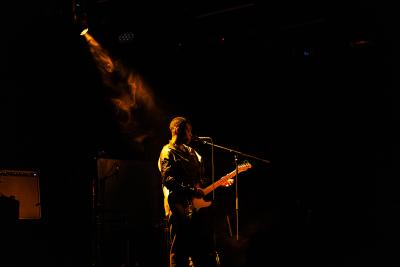
Alpha Maid, from London’s AD 93 label, opening the second day’s main stage with a grunge- and indie-infused set reminiscent of label mates Moin [see zweikommasieben #29] and underground-everything OG Dean Blunt [see zweikommasieben #13]. The trio captivated the audience from the first note and set the tone for another intense night.
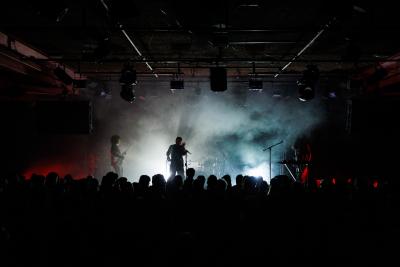
Ghostmass, a noise-doom-drone supergroup from Beijing’s fringes on their first European tour, delivering a visceral set filled with chaotic sound and unusual call-and-response vocals—Yan Jun growling while Yang Kuku screaming in reply.
The 24th edition of LUFF felt strong, urgent, and unflinching. Yet it raises a question: should a film and music festival take on the role of an activist platform? Or does it risk overshadowing or even jeopardizing its traditional forte—presenting art that already embodies political tensions in its own language?
By refusing to play by the rules—whether artistic or political—LUFF 2025 reaffirmed its identity as a festival that thrives on risk, friction, and change. Its embrace of activism not only signals its commitment to a just world but also invites audiences to reflect on the delicate balance between artistic radicality and institutional advocacy.