No Need for Coherence
Nicolás Jaar
Photography

Nicolás Jaar keeps himself busy. In 2020, the Chilean-American artist released his new album Cenizas and the LP Telas on his label Other People, only months after taking up again the older project Against All Logic. As the latter, Jaar has published an EP, Illusions Of Shameless Abundance, and an album, 2017–2019, both on Other People. In addition, he spent the better part of 2019 in two residencies—at the Dutch cultural institution Het HEM and the Dar Yusuf Nasri Jacier for Art and Research in the West Bank, where Jaar installed a studio meant to facilitate local music production. Finally, Jaar conceived a performance “for 16 buried speakers” for the Sharjah Architecture Triennal.
In November 2019, Mathis Neuhaus met with Jaar during his residency at Het HEM, a former ammunition factory, in Zandaam. Their conversation and the reflections to which it led are centered on music’s potential for critique, the continuing rapprochement of different art forms, and the politics of collaborative work.
This essay was originally published in issue #21.
When I first met Nicolás Jaar early last year, I asked him what job description most adequately suited his work. Do labels such as “artist,” “performer,” and “musician” apply or are these terms too narrow to encompass the range of his artistic practice? His answer was brief: “If I’m being honest, I’d love to just sit alone in my room all day and work on beats.” I took his flippancy as a product of, and perhaps comment on, the artificial context of the conversation in which this answer was delivered—on one of the stages at Rewire Festival [see zweikommasieben #18] in front of about 350 people who hung onto his every word. If the question was uninspired, the brusque answer hinted at the fact that Jaar hadn’t changed his approach to his work since the release of his debut album, Space Is Only Noise [Circus Company, 2011]. At the time, being 21 years old, he emerged as one of the most promising musical talents of the still young millennium. Jaar has delivered on this promise, and over the past ten years has released a number of critically acclaimed albums alongside other works in diverse forms and formats that defy easy classification. In addition, he has worked with an increasing number of other artists, which in turn has extended his own practice. If anything, then, Jaar seems to have been doing everything other than hiding out in his room. There are his collaborations with other musicians, such as FKA Twigs, whose latest album MAGDALENE [Young Turks, 2019] he co-produced, and Dave Harrington, with whom he performed as the group Darkside between 2011 and 2014, and with fine artists, including the Algiers-based artist Lydia Ourahmane and the Mexican choreographer Stéphanie Janaina. This list is far from exhaustive, which in itself allows for a preliminary confirmation of Jaar’s artistic self-definition: he certainly prefers variety to over-determination. Still, this leaves much room for interpretation. When I met the musician again in a former ammunition factory in Holland last December—this time without an audience—I couldn’t resist again asking him the question stated at the outset of this essay.
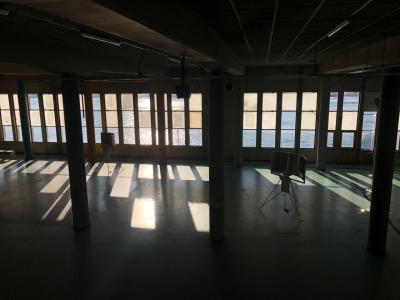
This factory is located in Zandaam, a thirty-minute ferry ride from Amsterdam’s central station, and has been known as Het HEM since 2018, when it opened its doors as a thoroughly re-designed historical site turned cultural institution. The site’s reputation has grown sufficiently to attract international visitors whose spending power—the on-site restaurant serves an eight-course meal for 60 Euros (not including drinks)—matches the illustriousness of its residents, such as Jaar who spent three months there in 2019. Het HEM is a well-oiled cultural apparatus that profits from the necessary official support, a constructive relationship with local politics, and its structuration as a non-profit organization. Consider, for example, that only few months after its official opening a ferry route was made available to the otherwise difficult-to-reach location. The program of Het HEM is divided into three so-called Chapters spread out over the year. Last year, Jaar was tasked with curating the second chapter. As he mentions in our conversation, he accepted the offer on the condition that he would be allowed to engage with the problematic history of the site, both deeply implicated in local history and wider geopolitical events and structures. This self-imposed task required a great deal of support, it suffices to say at this point. But the question remains: how do you define your artistic practice? “I’m a musician first and foremost. For me, producing music is an introspective process that takes up most of my time,” Jaar insists again. Yet, he adds: “With all the other projects, I enjoy working closely with other people. I think of collaboration as an intense and communal research project, which develops from the interests and abilities of the people involved. It doesn’t have a singular source. That also gives it a political impulse. I’m interested in how work happens in collectives, and how you can create a productive space for different voices. There’s no need for coherence all the time.”
An example of this interest was on show at Het HEM under the title No Camouflage, which Jaar created in collaboration with the Shock Forest Group. It consists of five works that are complemented by Jaar’s in-situ piece Incomprehensible Sun and the sound installation Retaining the Energy, but Losing the Image, which was conceived together with Vincent de Belleval and which by now has been seen and heard by audiences across the globe. The Shock Forest Group focuses on non-determined installations whose contents draw on archive materials and analyses of the history and present of local environments (more on this below) as well as the philosophical, ethical, and societal questions this research raises. The team behind Shock Forest group comes from different national and disciplinary backgrounds, ranging from architecture to cartography, linguistics to programming, urban planning to biology, and design and engineering. Jaar recruited them for the residency at Het HEM, and together they used the site of the former ammunition factory as the starting point for their research. Since I’m interested in the eclectic nature of the collective, I ask him about his experience with this particular collaboration. He answers by way of a reference to jazz: “What happens when you bring together these great musicians? Free jazz is one of the genres I listen to the most. I love its fluidity and how new things emerge all the time, with multilingual, generative, chaotic, and spiritual things happening in the background. And I think I cannot always put that in my music, so I am looking for other ways of expressing these qualities.”
In this approach, Jaar and the Shock Forest Group exhibit similar methodical interests beyond those of jazz, for example the work of formations such as Forensic Architecture. The latter’s team is associated with Goldsmiths (part of the University of London) and focuses on activist labor against human right violations and misinformation campaigns. Their work blurs the lines between fine art, science, and activism, as they collect images, videos, and other information, which they then re-work artistically and by other means in order to provide new perspectives and intellectual as well as affective resonances on the topic under consideration. Forensic Architecture has presented works at biennales, conferences, and exhibitions. In their engagement with and critique of real events and developments, such as the Grenfell Tower fire, the murder of Halil Yozgat by neo-nazis in Kassel in Germany, or U.S. drone strikes in Pakistan, the collective becomes part of a long tradition within the fine arts that also includes the work of Jaar and the Shock Forest Group, although their collaboration remained focused on one particular institution. This begs the question (and narrowing of scope): how and where does music fit into such an approach?
The agents of contemporary music production tend to enjoy greater artistic autonomy than fine artists in the face of institutional pressures—pressures often implicit in the provision of support, as is the case for a critique of an institution that has been green-lit by the institution itself. This state of affairs derives from models of distribution as well as the conditions of production, support structures (financial and otherwise), and the specific intricacies of the given economic context. It seems to me that musicians depend less often on the benevolence of institutions, or do so to a lesser degree, which gives them more freedom and flexibility to distribute their analysis and critique of certain institutions. Take, for example, the album DJ Tools [UIQ, 2018] by rkss [see zweikommasieben #19], whose source material was an EDM-sample database on Beatport and was reworked to ask questions about in- and exclusion within electronic music. But how can music take root within the structures of an established institution in order to create fertile ground for critical discourses and histories—including for Jaar when he leaves the solitude of his studio?
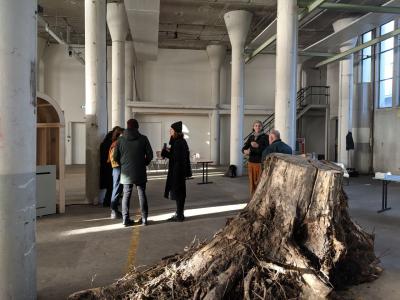
One possibility we zero in on during our conversation is the idea of an archive, or, rather, how one can think about a context, a location, an institution—or as whatever entity a particular subject manifests—as an archive. Just one example that comes up: Angelus Novus by Paul Klee as archive. The painting has been on Jaar’s mind for a while and is prominently feature in one of the films in the exhibition. The woods surrounding a former ammunition factory, known as Shock Forest because it has served as a bomb-testing site and has absorbed the shocks of the detonations, can be an archive. “We were interested in showing that the forest itself archives what has happened in it. It has a subjectivity.”
This extension of the concept of the archive beyond the usual purview of a structured collection to a multi-layered unit of organization allows for the forest and its (hi)stories to be made useable and visible in different ways, including musically. An archive demands a response, and in No Camouflage I encounter an interactive installation that allows me to enter a conversation with the forest. As Jaar explains it: “Every time one of the questions posed in the installation is answered, this answer is fed into the system, which changes the sound you can hear in the space. The logic is one of collectivity and it serves as a fluid archive.”
I encountered this archive again when I listened to the recording of the conversation with Jaar, which took place in the same room as the installation. Its sound can be heard as constant white noise in the background—preserved and archived (in second order?), if inadvertently. Another piece at Het HEM in relation to the forest can be understood as a palette cleanser: its outline, in smaller scale, is remapped by pieces of plywood and fitted with soundboards by Jaar and the Shock Forest Group. Audiences listen to a drone composition that acquires another dimension when one lays down on the boards and feels it as a physical sensation. I feel connected to the forest in this moment—sappy, I know, but true.
Towards the end of our conversation, after we have discussed the topic of the archive at length but certainly not to exhaustion, Jaar goes one step further. He cites his collaborator, the artist and curator Rolando Hernández, who understands the entire activity of the Shock Forest Group as an archive. Hernández postulates the possibility of a living and dematerialized archive, which is not so much constituted by works of art but the numerous visitors that have witnessed the doings of the Shock Forest Group during their residency, and the encounters and conversations that occurred in this context. The current text forms part of this archive, if as ambivalently as Jaar sees his own work as a musician, performer, collaborator, activist, and someone who provides impulses and a sounding board in a conversation. This leads me full circle to his initial assertion, that persistent coherence is by no means mandatory or desirable, with which I wholeheartedly agree. It debunks the unfulfillable promise of completion, which, in an increasingly complex world, seems less warranted than the conscious disavowal of determination in favor of multiplicities and ambiguities. If you can afford it, that is.